
Here’s a simple, clear, Indian-style article explaining the difference between trading and investing:
Trading vs Investing: What’s the Real Difference?
An Indian Perspective
When it comes to growing money in the share market, most people in India hear two popular words — trading and investing. Though both involve the stock market, the mindset, time horizon, risk level, and goals behind them are completely different. Understanding this difference can help you choose the right path for your financial journey.
1. Time Horizon
Trading:
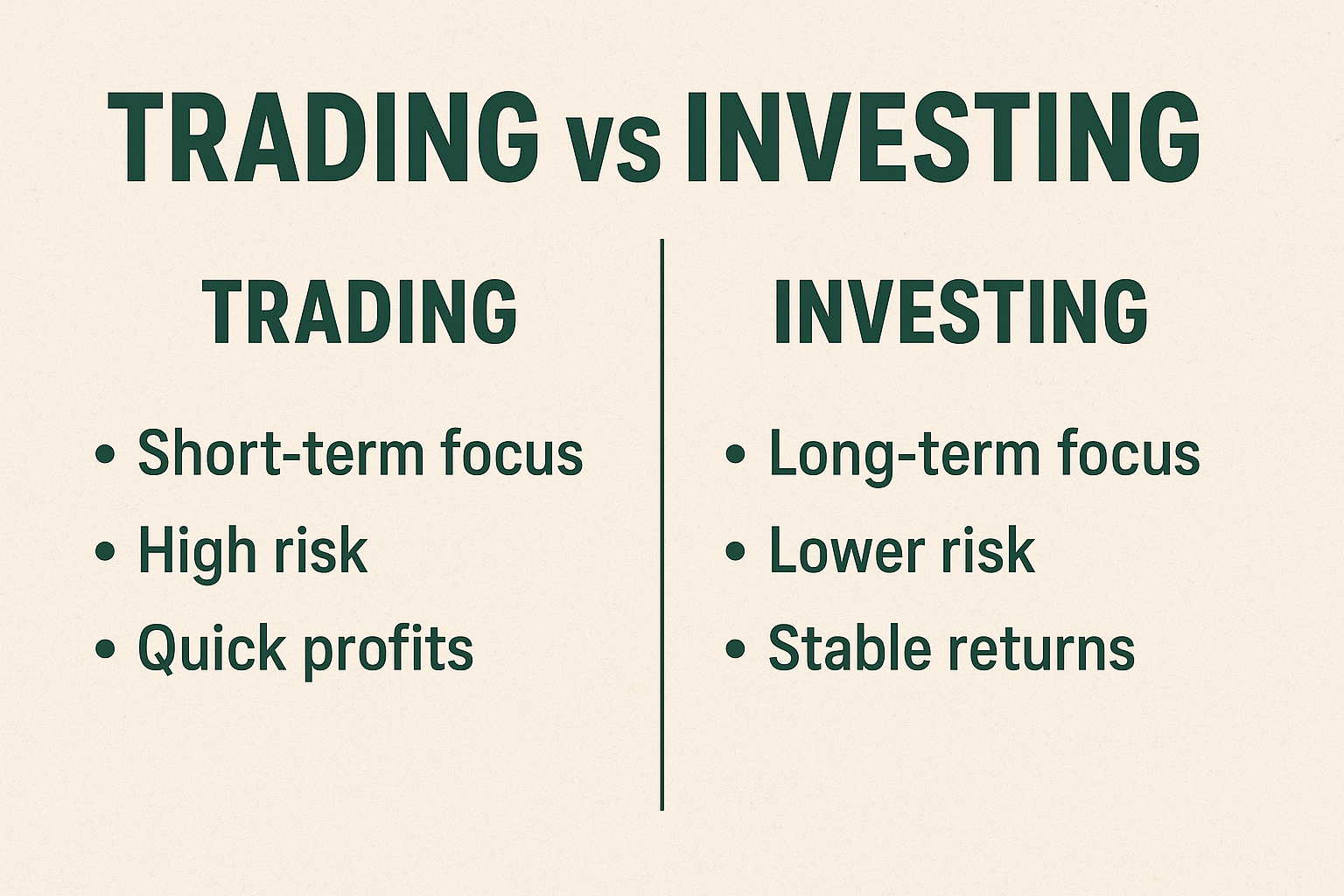
Trading is all about short-term movements. Traders buy and sell stocks frequently—sometimes within minutes, hours, or days. The idea is to take advantage of quick price fluctuations.
Investing:
Investing is a long-term approach. Investors hold shares for years or even decades, focusing on the overall growth of companies and the economy.
2. Purpose & Mindset
Trading:
Traders focus on quick profits. They watch charts, news, and indicators closely. Decisions are made based on short-term trends.
Investing:
Investors aim for wealth creation. They rely on company fundamentals, management quality, long-term growth, and economic trends.
3. Risk Level
Trading:
Trading carries higher risk because prices move fast. If you’re not experienced or disciplined, losses can happen quickly.
Investing:
Investing generally has lower risk, especially if done in good companies with strong fundamentals. Time in the market reduces volatility.
4. Skills Required
Trading:
Requires technical analysis, chart reading, market timing, and strict discipline.
Investing:
Requires understanding of business models, financial statements, long-term trends, and economic factors.
5. Returns
Trading:
Returns can be high in a short time, but so can losses. It’s not consistent for everyone.
Investing:
Returns are gradual but stable. Compounding plays a big role, especially in stocks or mutual funds.
6. Example
- Trading: Buying Tata Motors shares at ₹850 in the morning and selling at ₹865 by afternoon.
- Investing: Buying Infosys or HDFC Bank and holding for 5–10 years to benefit from long-term growth.
Conclusion
Both trading and investing have their own benefits.
- If you enjoy market action and can manage high risk — trading may suit you.
- If you want stable, long-term wealth — investing is the better choice.
For most Indian families, a mix of systematic investing and occasional trading (only if you are experienced) works best.
