
Risks in Swing Trading: What Every Indian Trader Should Know
Swing trading has become quite popular in India—especially among youngsters and working professionals who want to earn a little extra on the side. It sounds exciting: hold a stock for a few days or weeks, catch a good “swing,” and book profits. But behind those quick gains lie some serious risks that every trader must understand.
Below are the major risks involved in swing trading, explained in a way any Indian trader can relate to.
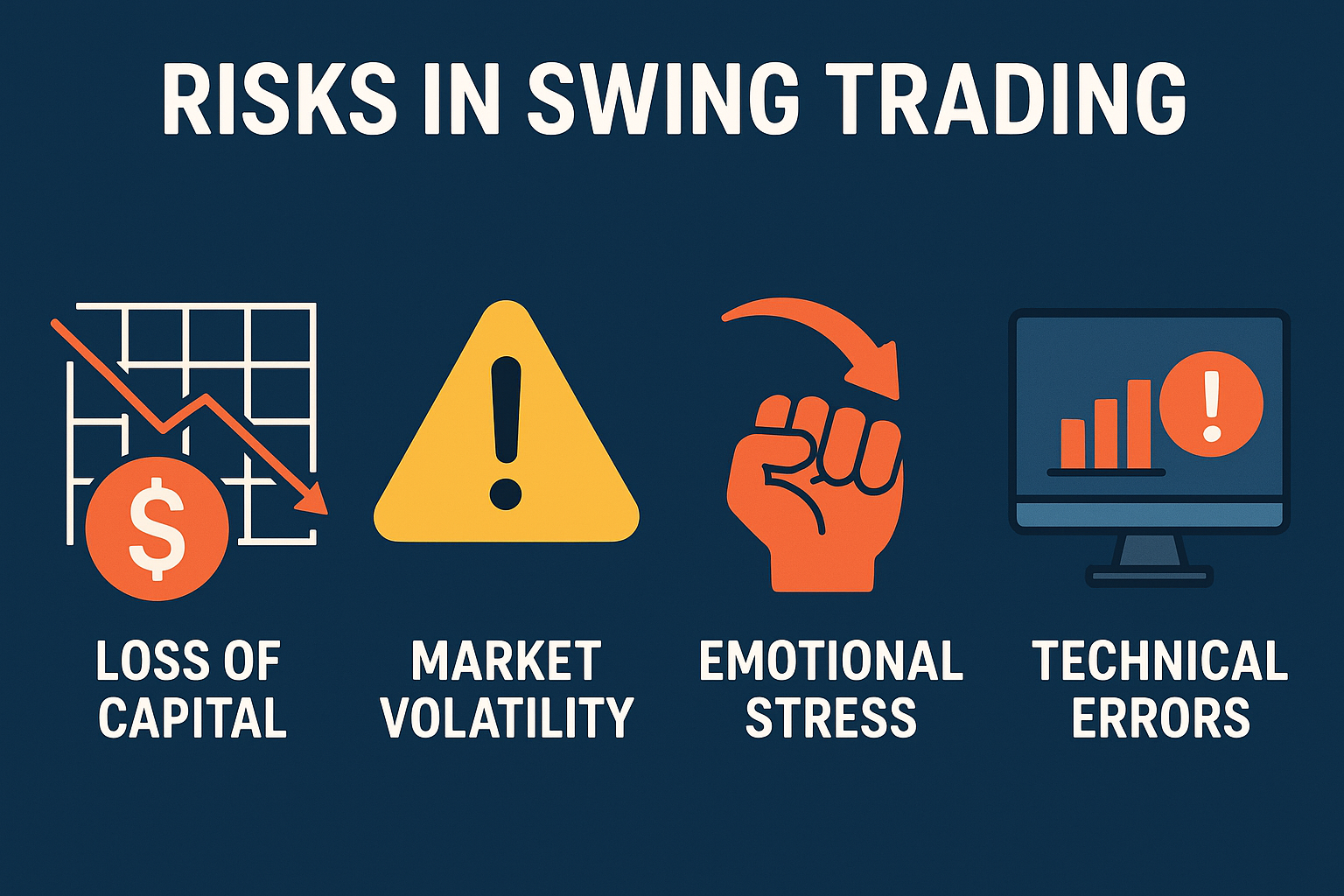
1. Market Volatility
Indian markets, especially the mid-cap and small-cap segments, can move unpredictably. A stock that looks strong today can suddenly crash tomorrow due to global cues, political announcements, or unexpected news.
Since swing traders hold positions overnight, they face gap-up or gap-down risks, which cannot be controlled with intraday stop-loss.
2. Overnight & Weekend Risk
Many traders have faced this: you go to sleep after buying a stock, and next morning it opens 5–10% down due to some negative news.
This is common in India where corporate announcements often come after market hours.
Swing traders are always exposed to such overnight shocks.
3. False Breakouts
Indian markets are notorious for fake breakouts.
A stock might break a resistance level for a few minutes or hours and trick you into entering the trade—only to fall back and hit your stop-loss.
This is especially common in highly speculative stocks.
4. Emotional Pressure
Unlike long-term investing, swing trading requires monitoring charts, indicators, and news regularly.
This can create pressure and lead to emotional decisions like:
- Booking loss too early
- Avoiding stop-loss
- Averaging losing trades
This emotional stress can harm your mental and financial health.
5. Liquidity Issues
In India, many stocks—especially small-caps—have low liquidity.
If you try to exit a position quickly, you may not find buyers at your desired price.
This slippage can increase your losses.
6. High Brokerage & Tax Costs
If you are an active swing trader, your brokerage charges, STT, GST, and other taxes add up quickly.
Even if you make profits, these costs can eat a good portion of them.
7. Wrong Timing Due to News
Swing traders often rely on technical analysis.
But in India, fundamental news hits fast—RBI announcements, Budget changes, SEBI regulations, global market crashes, company results, etc.
These can completely invalidate your technical chart patterns overnight.
8. Requires Knowledge & Discipline
Swing trading may look simple on YouTube, but in reality, you need:
- Technical analysis skills
- Proper risk management
- Patience
- Strong control over emotions
Without these, losses are almost guaranteed.
Conclusion
Swing trading can be profitable, but only when done with discipline, knowledge, and proper risk management.
Indian markets are fast, unpredictable, and sensitive to global events. So before jumping in, make sure you understand the risks clearly.
Remember: In the stock market, protecting your capital is more important than chasing quick profits.
